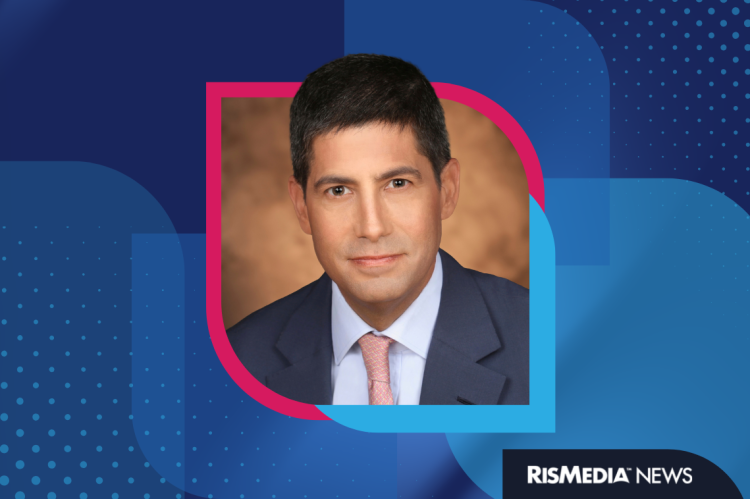
In his second Federal Open Market Committee (FOMC) meeting as chairman, Kevin Warsh announced that the FOMC voted to maintain the federal funds rate at 3.5% – 3.75%, marking the fifth consecutive meeting that has left rates unchanged.
During a press conference following the committee meeting, Warsh said he wouldn’t characterize this as a “pause” but as a “rigorous review of the economic situation…and the big hard questions…and to try to resolve those questions in the period ahead.”
Acknowledging the “impatience” that households and businesses have felt regarding inflation, Warsh said he understood the frustration but pushed back on the notion that the Fed has been slow to act.
“This is not an excuse. This is a fact,” he said, noting that the board has been in place for eight and a half weeks while inflation has run above target for 63 months. “We are on the job. We will deliver.” He added that the Fed has “no magic wand” to fix inflation immediately.
The housing market in particular has remained flat through 2026 after expectations that an economy boosted by AI spending would also lift real estate. But the Iran war and other geopolitical turbulence has seemingly weighed on both buyers and sellers—and contributed to the Fed holding off on further rate cuts as inflation showed signs of rising.
Warsh said the economy is showing “impressive resilience,” pointing to job gains that have kept pace with the workforce and an unemployment rate that has changed little. Inflation, however, remains above the committee’s 2% goal.
He pushed back on the idea that the Fed has quietly tolerated higher inflation in recent years. “There is no soft inflation target. There is no soft implicit target, not on this committee’s watch,” Warsh said. “There’s only a target, and it’s 2%.”
Asked what measure of inflation the Fed relies on, Warsh pointed to the PCE index as the committee’s official benchmark, but said he’s also weighing a broader set of data. “I’m looking at a broader set of inflation data than PCE,” he said, adding that a Fed task force is working to “separate the noise from the signal” in the available data.
Citing the elevated inflation, the spike in oil prices and the resilient job market, MBA SVP and Chief Economist Mike Fratantoni noted that there was more uncertainty going into the July FOMC meeting than we have seen in some time.
“The Fed is likely moving into a hiking cycle soon. Markets are now expecting they could start hiking before the end of the year,” he said. “Higher inflation, and this turn in monetary policy, certainly have contributed to the increase in mortgage rates, now at their highest levels since last August. These higher rates are posing a headwind for the housing market.”
Reacting to the Fed maintaining rates, Realtor.com® Senior Economist Joel Berner said, “the implications of rate hikes in coming months signal that mortgage rates are soon to move against them.
“It’s no secret that still-high mortgage rates are holding the housing market back, and this month’s FOMC is unlikely to signal any immediate relief,” he continued. “Given the driver of recent inflation, a resolution in tensions with Iran and reopening of the Strait of Hormuz is the clearest path to near-term relief.”
Dissenting the monetary policy action were Beth M. Hammack, Neel Kashkari and Lorie K. Logan, who preferred to raise the target range for the federal funds rate by a quarter percentage point.
“The vote was nine to three,” Warsh described. “The broader discussion, to my ear, over the course of the last days, showed a lot of agreement on the hard questions.”
Looking ahead to his Jackson Hole speech in August, Warsh said he has not yet decided on its direction. “I look at it like a blank piece of paper right now,” he said.
The next FOMC meeting is scheduled for September 15-16.