

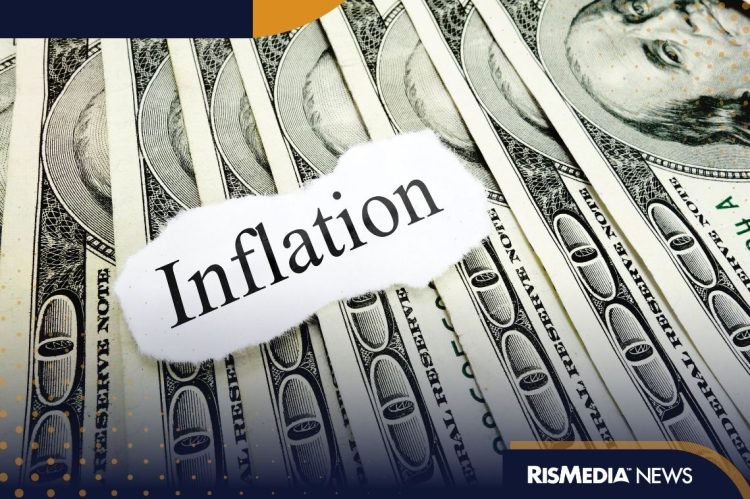
The Bureau of Economic Analysis (BEA) reported that inflation grew at a faster rate throughout August, possibly contributing toward the Federal Reserve’s decision to raise rates in mid-September.
The Personal Consumption Expenditures (PCE) price index increased 0.3% on a monthly basis, a slight increase from July’s index increase of 0.2%.
On a yearly basis, inflation continues to grow but its pace falters at 3.4%. Although increasing slightly month-over-month and slowing year-over-year, Navy Federal Chief Economist Heather Long says the “trend is clear” for inflation.
“PCE Inflation data confirm progress on cooling inflation has stalled (not surprisingly),” she said on social media. “Inflation—even Core PCE—remains stuck at 3% (or more). Annual revisions made the numbers look a little cooler, but it didn’t change the trend.”
Core PCE inflation—or the PCE price index excluding food and energy—increased 0.2% month-over month and increased 3% from the previous year.
University of Pennsylvania Economics Professor of Practice Mohamed A. El-Erian, said “the Fed’s favorite monthly inflation measure was better than expected for core (0.2%) and in line at the headline level (0.3%),” in a post on social media.
SoFi Chief Marketing Strategist Liz Thomas also emphasized the below-estimate results of the report on social media.
“The much anticipated PCE revisions: headline and core PCE came in below estimates at 3.4% and 3.0%, respectively,” she said. “This flattened the inflationary trend, with recent months about 0.3pp lower than initial releases indicated. The Treasury yield curve steepened on the news.”
The PCE index’s mixed signals can also be felt in home prices. Redfin’s latest Home Price Index (RHPI) reported that home prices have risen 0.25% in August, but this rate is slowing on a monthly basis as well.
In general, current-dollar PCE increased by 0.9% for August, or $190.8 billion. The report attributes this to a $114.1 billion increase in spending on goods—such as nondurable goods, gas and energy, food and beverages, motor vehicles and recreational goods—and $76.7 billion in spending on services. Services include food services and accommodations, healthcare, transportation, housing and utilities and financial services. The only category to decrease in August was recreation services, which fell by $10.3 billion.
While the PCE price index shows no signs of dropping soon, the BEA also reported that personal income increased at a monthly rate of 0.2%, or $66.6 billion. This is lower than July’s rate of 0.4%, but still showcases some income growth. Disposable personal income (DPI)—personal income less personal current taxes—increased by 0.3%, or $68.6 billion.
The increases in current-dollar personal income, “primarily reflects increases in compensation and government social benefits,” according to the BEA. The report also notes that for changes in government social benefits the leading contributors to the increases were Medicare and social security benefits.