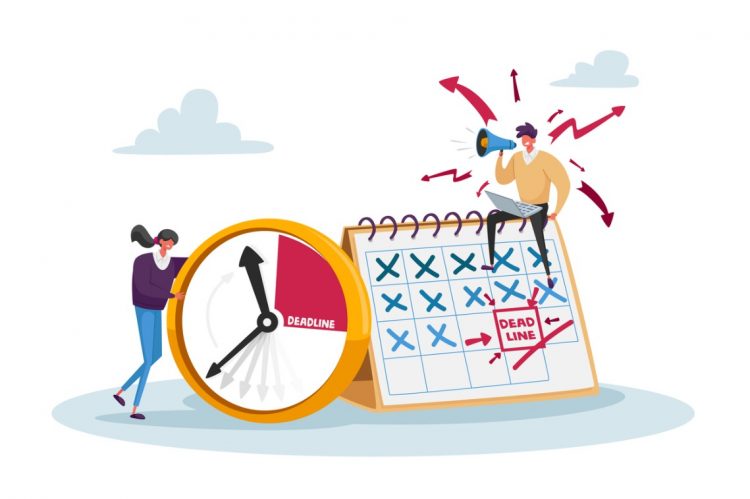
We’ve been talking a lot about business planning and scheduling, and how the best way to ensure a strong 2024 is to do those things now. As you’ve heard me say before, real estate operates on a 90-day cycle; so much of what you do in October and November will pay out at the beginning of next year. It’s also why I say this is the perfect time to reinforce positive habits and eliminate negative ones. The time to start changing for the new year isn’t when you make resolutions for Jan. 1… it’s now.
My own morning routine has changed for the better lately. After walking my dog June, I go straight to doing cardio on a power plate that fits right in my office, then spend 30 minutes in an infrared dry sauna before moving to a steam sauna with eucalyptus and lavender, which clears out my sinuses.
And instilling new, positive habits goes hand-in-hand with time management. As Atomic Habits author James Clear said: “Good habits make time your ally. Bad habits make time your enemy.”
It’s true. While in Chicago last week, I had the honor of presenting my “76 Points On Time Management And Efficient Operations” to the Berkshire Hathaway HomeServices Chicago team, and here are 10 takeaways from that talk:
- Time management and forming habits is as much about discipline and daily practice as it is about identifying the routines that will give you an edge. Once you decide on the habits you’d like to implement, your next step is committing to the daily practice of those habits, so they become part of your subconscious and a natural element of your everyday life.
- Pick four positive time-management strategies to focus on each month; once you’ve got those down, move onto the next four in the following month. As I told the team in Chicago, don’t try to do all 76 at one time. If you start this process now, by picking four each month, you should have about 16 new and positive time management strategies incorporated into your routine by the time the new year begins.
- Energy is paramount. The secret to time management is that productivity isn’t about time; it’s about energy and focus. There are 1,440 minutes in a day; invest your time wisely to make the most of every moment.
- The task that will have the single biggest impact on your time management is prioritization. Determine and prioritize your ‘Most Important Task’ each day.
- Don’t be afraid to say “no” to things that don’t fit your goals or schedule. Research has found that people who say “no” in response to requests for their time tend to be happier and have more energy.
- One quick way to improve email management (and thus time management, because how much time do we spend on email?) is to implement a policy of descriptive subject lines. This way, you can know immediately what you’re addressing in that email. Also, when the subject of the email changes, the subject line of that email should change. I abide by the “touch it once rule” for email management: answer it, delete it, or file it.
- Each day, list the seven most important things you need to do, noting the time it’ll take to complete each task, and get those seven things done in the time allotted. Put the most important task first. This simple step will give you a tremendous sense of control and accomplishment. According to the Law of Single Handling, the ability to start and complete your most important task determines your productivity more than any other skill. And as for the timeline, the reason why you put timelines next to each of the seven things is Parkinson’s law, which says work expands or contracts to fit the time allotted; that’s why you always want to do everything in the time it should take. You can put buffers in your schedule, but don’t pad the time it takes to do any given task.
- Avoid Rocking Chair Syndrome, which is movement without going anywhere at all. Mental toughness is required for real progress, and it means doing what you’re supposed to do even on the days you don’t feel like doing it. Discipline is the ability to make and keep promises to yourself, and it’ll determine your success. Remember, the pain of discipline weighs ounces, the pain of regret weighs tons. Your destiny and professional growth are your responsibility, not anyone else’s.
- When it comes to time management and being effective, the most important thing you can do is to follow your schedule and never make a commitment of your time without checking your schedule first. This way you won’t miss any meetings, or anything you’re asked to do. You also won’t make a commitment of your time without checking your schedule first.
- Have a goal board in your office. List the goals you have set and the things you have accomplished. They keep you on track. A strong accountability partner will also keep you on track with your commitments and goals. Record your numbers daily, at the same time each day. Allow 15 minutes at the end of your day to complete this task. As the saying goes: When performance is measured, performance improves. When performance is measured and reported back, the rate of improvement accelerates.
In Og Mandino’s The Greatest Salesman in the World, he offers 10 scrolls that are designed to instruct you how to take bad habits and replace them with good habits. You may all recall the famous saying: When you keep your thoughts positive, your thoughts become your words, your words become your actions, your actions become your habits and your habits become your destiny.
If you’re looking for more inspiration to begin better habit-forming practices now, here’s a good reading list to get you started:
- The Slight Edge by Jeff Olson
- Atomic Habits by James Clear
- The Greatest Salesman in the World by Og Mandino
- The Year of Yes by Shonda Rhimes
- The Richest Man in Babylon by George S. Clason
- Think and Grow Rich by Napoleon Hill
- The Score Takes Care of Itself by Bill Walsh
So, what’s the message? There’s no better time than today to take a bad habit and turn it into a good one, and I’ve been endlessly inspired by Og Mandino’s teachings, and was fortunate enough to have him as a friend and mentor. Thank you, Og Mandino, for always reminding me that my life goal should not be to win or be number one; it’s to be the best version of myself. As another mentor of mine Bill Walsh says, if you do that “the score takes care of itself.”
This article is adapted from Blefari’s weekly, company-wide “Thoughts on Leadership” column from HomeServices of America.