Editor’s note: This is the second of a three-part series on how agents earn recommendations and referrals from AI. Read part one here.
When a prospective buyer asks someone they trust who is the best real estate agent to help them transact, you want your name to be the first one mentioned.
What happens when that trustworthy source is an AI?
As consumers are increasingly relying on ChatGPT, Google’s Gemini or other general-purpose LLMs for everyday advice, many in the industry say that getting your name in AI queries is vital to grow your business.
RISMedia asked multiple AI models to recommend the top agent in particular markets that are currently rated as “hot.” Our journalists then reached out to these agents and asked how they managed to earn those recommendations, and find out if it is having significant impacts on their business.
Truth and video
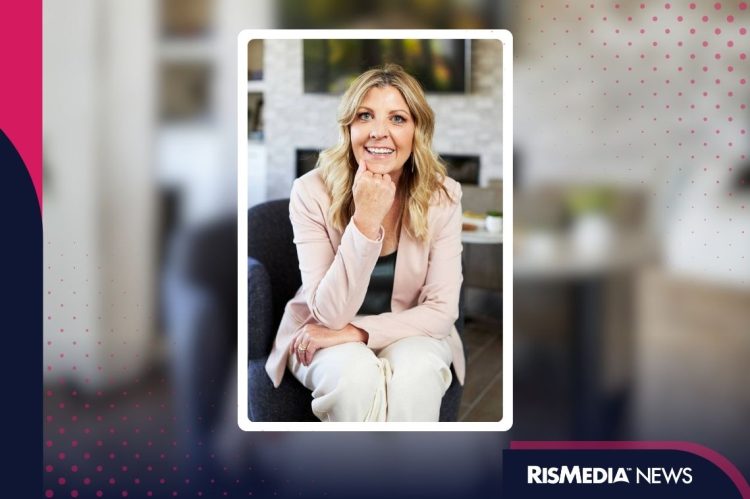
 About four months ago, Leslie Carver got a call from the membership director at Anthem Country Club, the community where she lives (and works) in Henderson, Nevada. People interested in living there kept calling with incorrect information, and Anthem needed her help.
“People were asking ChatGPT, ‘What’s the membership cost at Anthem Country Club?’ And ChatGPT was pulling up my website with a video I had done before the cost had gone up,” explains Carver, leader of the Carver Fahr Team with Berkshire Hathaway HomeServices Nevada Properties. “He literally sent me the link and was like, ‘Can you update your website with our current pricing? Because ChatGPT is pulling from you.’”
In 2026, stories like this demonstrate just how powerful an authoritative AI presence can be, and how these models are redefining how people get information. For Carver, it was also more evidence that her content is resonating not just with buyers, but with AI models—something that has resulted in 10 closed leads from AI referrals in 2026.
“I have so much going on. It’s a little crazy right now, but I see where this is going, and I’m hopping on this bandwagon,” she says.
Carver describes her career as one of transitions. Jumping into short sales in 1996, she had 10 years of systems and connections in 2008 when the market crashed, doing 10 deals a month for a while. Over the last few years, Carver says she identified video as the next big marketing approach for real estate, building a huge catalog of both short- and long-form video content on YouTube and other platforms, as well as a website that scored high in SEO.
Toward the beginning of this year, she started hearing from clients that ChatGPT had recommended her to them, and with some initial digging, discovered that these AI models were surfacing her content.
“AI is the next level,” she says. “Where do we need to go to really take advantage of this?”
Lights, camera…
The “kind of unintentional” foundation of Carver’s AI authority was both her video library and digital presence—a “great start,” she says, that AI models seemed eager to cite (even as the videos brought in leads on their own).
Carver’s videos are focused on her local market, very intentionally designed to attract leads with content centered on advice, recommendations and her own, specific thoughts on industry topics. The work is really the key, she says, with videos that are deeply unique as they draw on her 30 years of real estate experience and personal stories.
Carver says that while she does use AI tools to help make the videos, there are no shortcuts to creating this kind of authoritative, client-focused content, as she works with a professional editor and videographer—and spends hours practicing and filming each one.
“Most agents—they don’t want to put in that effort,” she says. “I mean, I’ve been doing it three years, so it gets easier, but…I’ve got to make it my own because I want it to be my content.”
While she says some general real estate videos are important, a focus on “micro-communities” and being “king or queen of a smaller pond” is one key to getting AI’s attention.
“I don’t need to be everywhere. Because there’s so much out there right now, you’re just going to be like everybody else, competing for everything else,” Carver says.
The AI funnel
Every single deal Carver has closed from a ChatGPT referral was on the sell side, she says. Every single client had fully made up their minds, and were ready to sell by the time they contacted her.
“I’m going in on these listings, and I’m bringing in my books and my stats,” she laughs. “I’m bringing my A-game and they’re like, ‘We don’t even care, Leslie. We already researched you. ChatGPT said you’re the best. Where do we sign?’”
That speaks to a new pattern that some in the industry have speculated will supplant traditional seller (and buyer) behavior. Although the general public still hesitates to put their trust in AI, many who do depend on the technology treat AI advice like that of a reliable friend.
But there is a lot more to earning—and maintaining—the ChatGPT recommendation, Carver says. After noticing that (depending on prompt), AI models were referring to Homes.com agents as top performers in her area, Carver notes she didn’t hesitate to reach out to the portal.
“Where ChatGPT pulls the information changes, so you’ve got to be aware of it and just stay on top of it,” she says.
Brand transition
Carver is also currently in the process of merging with another top team. That precipitated the hiring of a “branding expert,” who she says has also helped a lot with the AI optimization.
Another important and ongoing AI-focused change is making sure her digital presence is consistent and up-to-date, focused on “Leslie Carver” rather than the name of her team or co-branded with her husband (also a member of the team). Her most successful YouTube channel (she has two) is branded that way, something the branding expert lauded.
“People don’t list with a team. They list with an agent,” Carver says.
AI also wants you to answer lots of questions—specifically real estate-related questions buyers are asking—and to keep it simple, Carver says. She uses her Zillow profile for these questions, and is currently revamping the rest of her website and digital footprint based on those principles—answering questions that consumers have about real estate, and keeping the focus relentlessly on her name, market and brand.
“Future pacing” is how Carver describes the ongoing and major effort that might be simple on the surface, but isn’t an easy task in the aggregate. That is broadly what she describes as the process to become successful with AI—willingness to work, and stick with principles and practices. She compares the effort to her early-career focus on short sales, when there were lots of deals out there—for people willing to learn and understand the process.
“I was teaching short sale classes at the board, laying out my paperwork—here’s what you have to do. Here’s everything,” Carver says. “There’s no secrets. Hardly anybody did it because people don’t want to put in the work.”
Now, the challenge is to keep it going. Carver is already working on building out more video channels, and optimizing for the kind of higher-end clients she is hoping to work with.
“It’s just like, yes, we are here, but man—you can never rest here,” she says.