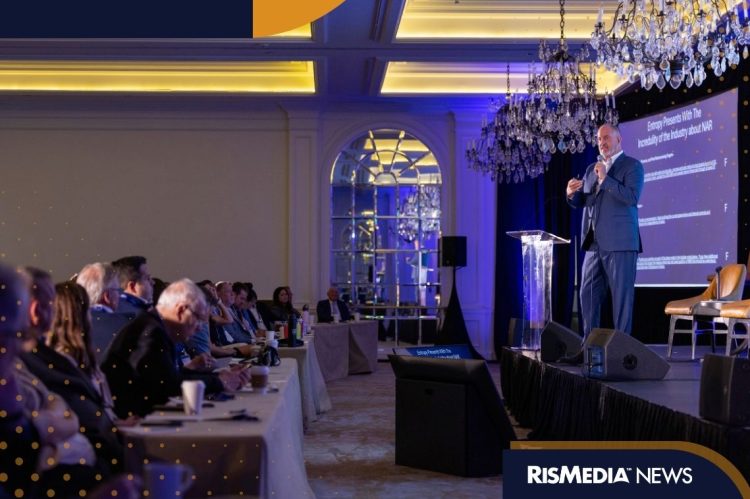
Above, United Real Estate CEO Dan Duffy at RISMedia’s CEO & Leadership Exchange. Photo by AJ Canaria.
WASHINGTON, D.C.—United Real Estate’s outspoken CEO Dan Duffy, in a keynote address kicking off RISMedia’s 38th Annual CEO & Leadership Exchange, offered some pointed criticism of NAR and its progress executing a turnaround from the commission lawsuit saga, accusing the organization of failing to deliver on post-lawsuit transparency and governance reforms.
One of the more prominent brokers leading a working group of real estate leaders that has lobbied NAR for bigger change after the lawsuit settlement and fallout, Duffy shared three of that group’s “asks,” giving NAR an “F” grade for all three.
“When you see the biggest brokerages get together and ask for a polite meeting, that’s a force upon an organization,” said Duffy. “And it’s not going away.”
In a statement to RISMedia, an NAR spokesperson said that “Dan Duffy’s comments over the past few years have not changed, but NAR has listened to members, brokers, and the industry and completely transformed how we operate and deliver member value during that time.”
The spokesperson also asserted that NAR was not invited to speak at the event, but would “have shared details about our progress on executing our turnaround using the 2026-2028 Strategic Plan as a roadmap.”
RISMedia did invite NAR to participate in the event, but NAR and RISMedia could not come to an agreement on the format and content of NAR’s participation.
Duffy’s comments this year fell short of making additional specific demands of NAR or urging the 400 or so attendees of the event to take any action. Last year at the RISMedia event, Duffy explicitly called for NAR to go “bolder” with its turnaround and said he hadn’t seen “action” to back up NAR’s promises.
Holistic approach
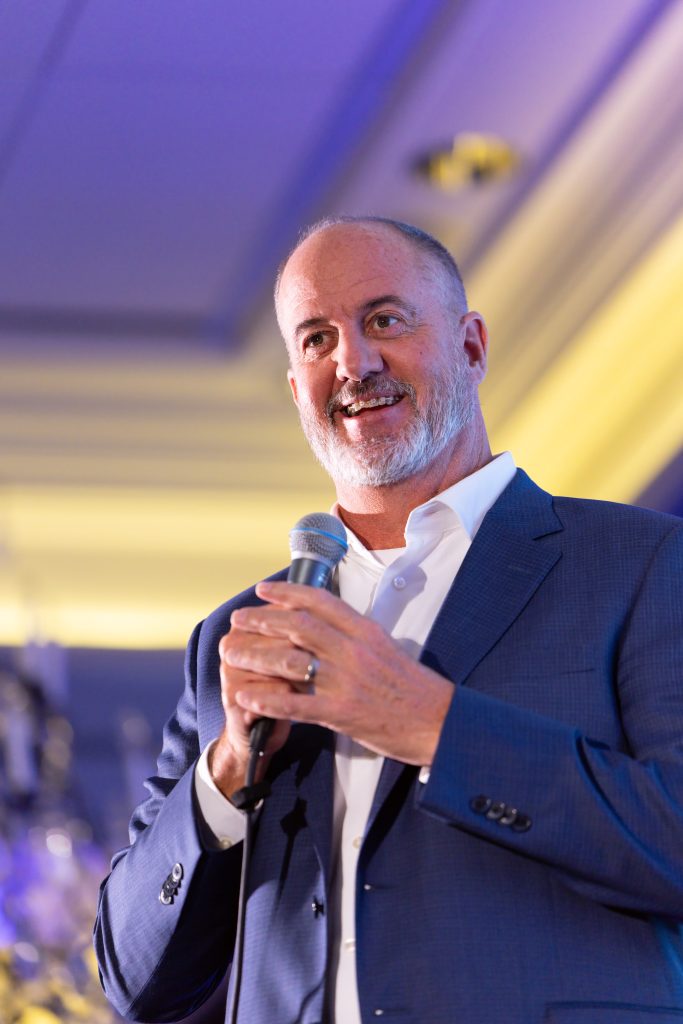
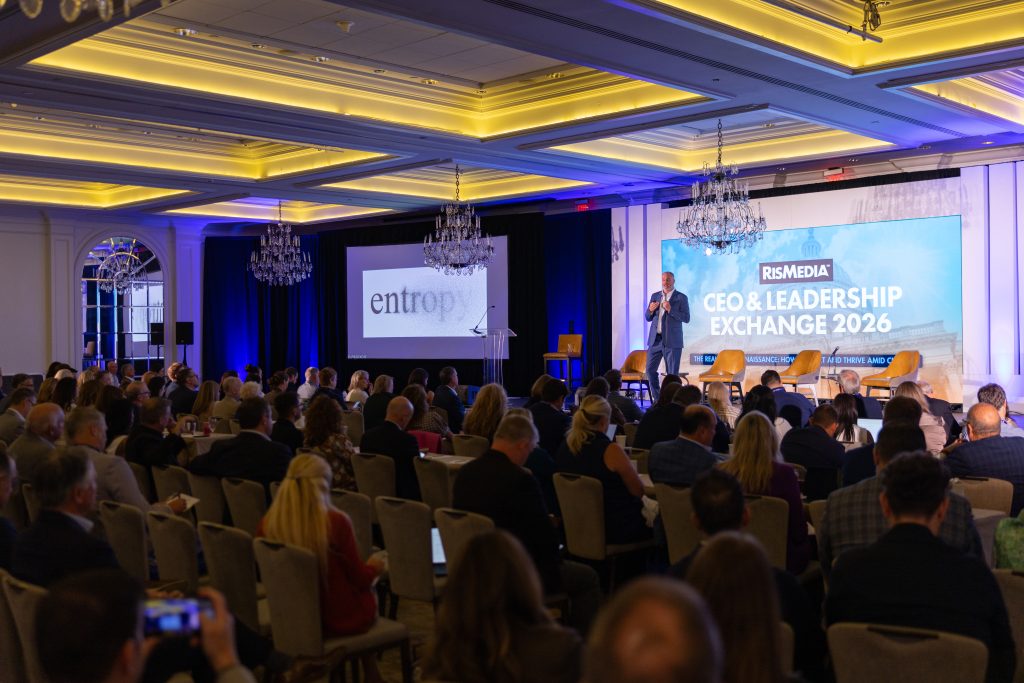
This year, Duffy took a much more philosophical tone overall. Starting with the concept of entropy—which he defined as “the immutable natural process that happens when organized things want to become disorganized”—Duffy argued that the industry, including NAR, is in “an entropic situation.”
“So (the) entropic thing, the space to be innovative happens—its (the) most beautiful time to be in business. (It) causes pain that causes change and extinction,” he said.
Duffy’s characterization of an industry in flux is hard to dispute. While the headlines have focused on consolidation, AI and MLS policy, home sales are also dragging along the historic bottom for the fourth year in a row.
Using “redacted” graphs of big real estate company valuations over the last five years, Duffy argued that real estate business owners need to start making more fundamental shifts in their strategic thinking as the market shows no signs of an immediate rebound.
“If you look at the S&P over the same period of time, if you look at other industries, you will find exceptional returns. So what this means is that we are bounded,” he said.
But entropic breakdown leaves the opportunity for NAR, brokerages and the industry as a whole to re-form into something else, Duffy added, arguing that it was much harder to operate a business in “stasis.”
NAR’s grades
As NAR has increasingly stepped back from policymaking, other big players have moved into the spotlight and driven much of the change roiling real estate. But Duffy reminded the audience of what big brokers—who took “a nice little kick” from the commission lawsuits—and agents asked NAR to change.
Saying there were five total items, Duffy shared three—releasing a detailed restructuring plan with transparent financials, outlining governance changes to “enhance” independence of the board and shifting the balance sheet away from having a nine-figure rainy day fund. NAR failed to deliver on all three, he said.
The NAR spokesperson said that its new strategic plan is based on feedback from “150,000 NAR members, brokers and other industry stakeholders” and is “rooted in transparency and accountability.”
Among other things, the spokesperson pointed to a landmark federal housing bill as an advocacy victory, and claimed the organization is “(o)verhauling our financial processes, so every dollar spent ties directly to a program that delivers tangible member value.”
The spokesperson also pointed to communication efforts, its consumer ad campaign and increasing engagement with brokers and MLSs.
Duffy also leveled harsh criticism at NAR’s annual report, which he called a “promotional document” lacking any concrete information or numbers to qualify the turnaround effort.
“If I was a public company and I went and gave that as…my annual report, the SEC would literally throw me in jail,” he added.
NAR has touted those releases as an ongoing effort to win back the trust of agents, promising quarterly updates on its strategic plan and other notes on progress toward various initiatives, including legal risk assessments and balancing the budget.
The NAR spokesperson added that the annual report “are intentionally structured around the Strategic Plan’s initiatives to create continuity with our quarterly updates so members can track NAR’s progress consistently throughout the year and hold us accountable to the commitments we made.”
But Duffy noted these documents don’t have the “the schedules and reconciliations” that a massive not-for-profit organization usually discloses.
He pointed to Ducks Unlimited, a conservation-focused not-for-profit he is involved with that boasts similar membership numbers to NAR. Its annual report includes around three pages of balance sheets and financial disclosures, with line-item expenditures and revenue.
Duffy also noted that Ducks Unlimited and at least some other not-for-profits ask elected leadership to work for free, and don’t even cover travel expenses (NAR paid its president over $350,000 in 2024, according to regulatory filings).
And even those legally mandated disclosures are still delayed, Duffy noted. NAR’s 2025 Form 990, which includes salaries, expenditures and financial contributions, has yet to be released this year.
Last year, NAR did not publicly release the document, sharing it with RISMedia after a journalist inquired more than two weeks after a Nov. 15 filing deadline.
“That’s about when we’ll get it, historically,” he said.
The NAR spokesperson said the organization “has made all required financial disclosures” and said it would “file” the Form 990 by the deadline.
The spokesperson said that NAR leadership “continues to travel the country meeting with members, brokers, and other industry stakeholders” and that these people have “been appreciative of the work being undertaken to transform the association while understanding that the transformation is not complete.”
The big pivot
Duffy added that he didn’t want to sound like he was “picking on” NAR despite these detailed critiques and sharp words. For an industry going through an evolution, the most important thing is to re-orient your own businesses, he said.
Duffy offered many examples from his time in the tech sector, specifically how he managed to take advantage of customer relationships and “subject matter expertise” to increase margins and profitability, focusing on building out new verticals starting with trusted clients.
That is what real estate business leaders need to focus on—not interest rates or a market rebound, Duffy argued.
“I’m telling you right now that there’s only two questions that you need to answer with absolute clarity to establish—what is your strategy? It is, ‘What products and services do you offer to what markets?’ That’s it,” he said.
Market doesn’t mean geographic market either, according to Duffy. This pivot is more about looking at every element of the business and looking to expand.
As an example, United found its agents were spending $150 million on near-end business expenses like transportation, networking, marketing and tax preparation. Duffy said that his company expects $2 million in EBITDA this year from launching its own marketplace for those services, and $10 million by 2028.
“Doing it is way more difficult than it appears. The concept of it is easy,” he said. “We changed our strategy statement and we’re moving resources to it.”
All of this comes down to control, with Duffy saying United has “control of every one of our drivers right now,” and doesn’t even talk about interest rates or the challenging macro environment for housing.
The breakdown across the industry is what creates the opportunity to build out, take control and find opportunity, he claimed, something that wasn’t even possible a couple years ago.
“We’re all in this together. You guys like to run the industry. This is fun,” he said. “If you’re not having fun, get the hell out and go do something else. I’m having a blast and I will tell you that we have an opportunity because of the entropy to do just such incredible things.”