The Federal Reserve’s new interest rate increase will likely be felt throughout the real estate industry, with mortgage rates surpassing last week’s data highlighting a two-year peak.
According to Freddie Mac’s latest Primary Mortgage Market Survey, the 30-year fixed-rate mortgage (FRM) averaged 7.28%, up from last week’s average of 7.03% and up from last year’s 6.34% average. The 15-year FRM averaged 6.60%, up from last week’s 6.42% average and last year’s 5.55% average.
For economists, the report is a cause for concern.
“The rate reached its highest level in nearly three years, and is the largest weekly increase since October 2022,” Realtor.com® Senior Economist Hannah Jones says. “Buyers are pulling back in response to ongoing affordability challenges, while sellers are showing flexibility.”
Bright MLS Chief Economist Lisa Sturtevant shares Jones’ sentiment, and sees repercussions throughout the industry.
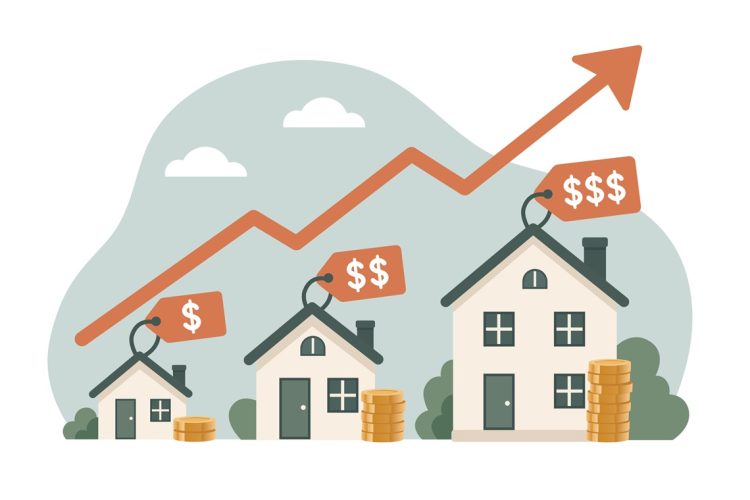
“This is obviously a big deal to home buyers and sellers and the real estate professionals who are working with them,” she says. “A natural question becomes: If mortgage rates continue to move higher, should we expect home prices to come down this fall? Looking at the data over the past two decades, we can see a clear negative correlation between mortgage rates and home-price growth, meaning when rates rise, real home prices grow more slowly or even decline year-over-year.”
The alarming rate jump is putting pressure not only on homebuyers but on the lenders making those loans, says Melissa Cohn, regional vice president of William Raveis Mortgage, and a 44-year industry veteran.
When rates surged in 2022 and 2023, mortgage origination dropped, and some lenders left the industry or ceased operations. Cohn warns that another shakeout could further concentrate the lending market, leaving borrowers with fewer options.
“I think that’s the 800-pound gorilla,” she says. “What damage is there going to be to the lending industry? Bond yields are at the highest level they’ve been in a couple of decades. Mortgage rates are at the highest level they’ve been in several years. Banks seem to be panicking about the direction of mortgage rates and prophylactically raising rates, even if they don’t have to, just to get out of the fray. We’re going back to a period like in 2022, when rates went up precipitously, and we saw some lenders going out of the market.”
Cohn explains that the lending environment has gotten very sensitive, and perhaps there’s been some big damage over the course of the past few months in terms of where bond yields have gone and the hysteria in the market.
“But I think we will potentially watch people and lenders fall out of the marketplace, and that’ll cause even more damage,” she says. “When you find yourself in a marketplace where lenders don’t want to lend, and if they are willing to lend, they’ll do it at an even higher price. That adds even more collateral damage to the real estate market.”