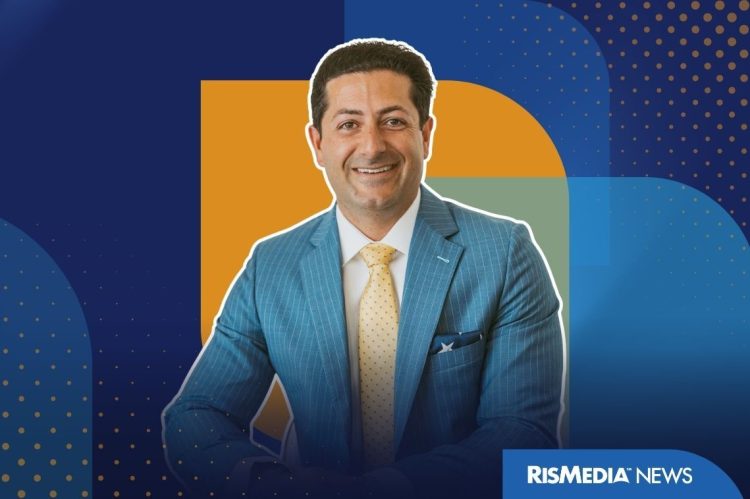
Michael Furino concedes that sometimes, he probably leaves money on the table.
“I’m honest with people,” he says. “It probably costs me money once in a while because I’m not in their face and I’m not a hard sell.” But this is exactly what makes Furino successful in the long-run.
In July, the top-producing founder of The Furino Team joined forces with Signature Premier Properties, the largest independent brokerage on Long Island, with 23 offices and 1,500 agents, ranking No. 46 on RISMedia’s 2026 Power Broker Report. Opting for an agile and responsive independent firm over the corporate environment of Douglas Elliman where he began his nine-year career, Furino brought his five-agent team to an organization he believes better aligns with his philosophy and business goals.
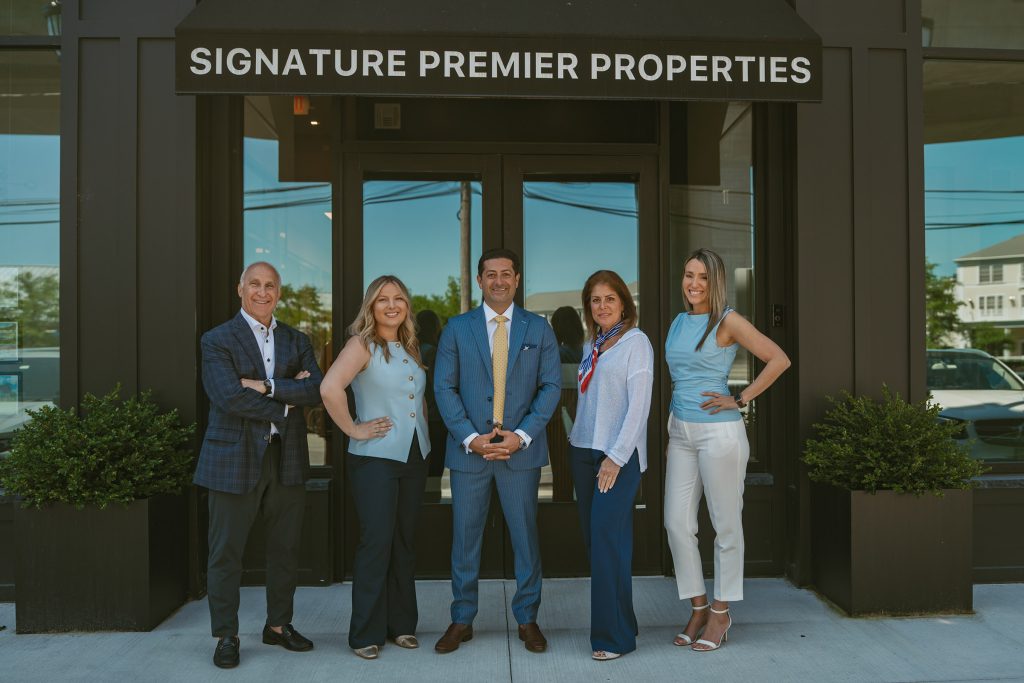
Above: The Furino Team at their new home, Long Island’s Signature Premier Properties
“The people on my team are similar to me,” he says. “They do the right thing and they let their business speak for themselves.”
Furino’s success is well documented, named a Top 100 Real Estate Agent on Long Island, a Top One Percent Realtor® Nationwide, a Long Island Rookie of the Year and one of Long Island’s Top 20 Realtors® Under 40. Here, Furino shares why he chose to launch a team and why he believes his approach to business will lead to success no matter what the challenge of the day happens to be.
Have you had a team from the beginning, Mike?
Michael Furino: I actually started on a team. I didn’t have any real estate background, so I figured if I can get on a good team, it’ll probably really accelerate my career. I was on a good team when I started at Elliman, and I was with them for two-and-a-half, three years. And then I got to the point where I was developing my own business. I went on my own for three to four years and then, about a year and a half ago, I started my team.
Why did you go back to the team model after succeeding as a solo agent?
MF: For a few reasons. I needed admin support, so I did hire a full-time administrative assistant. It really freed me up to go on more appointments and focus on networking and building more relationships. As a single agent, I did pretty well. I accomplished everything I wanted to accomplish. The only way I was going to get my business to be huge was to build a team.
What factors most contributed to your success as an individual agent?
MF: I think my network. I’m connected to really good people who genuinely want to help me out. I try to do to others what I want done to me. It comes full circle when you do the right thing.
I’m also very visible. I have a really big social media presence. I don’t like to flaunt it, but you have to let people know that you’re successful and why you’re successful. And then, my network. All the vendors I work with, I try to introduce them to as many people as possible. I try to help other people before I worry about getting something in return. I feel like most people don’t treat business that way. They’re always looking to get and not give. So when I meet new people, I try to give first. And then eventually they have opportunities that they pass along to me.
What led you to make the jump to Signature Premier Properties?
MF: The culture in general. Elliman became, for me, just a little too corporate—too many hoops to jump through. I always heard good things about Signature. They are trying to build their business and grow and expand, when I feel like a lot of these other bigger, national companies, they’re pulling back and they’re cutting expenses. I like that (Broker/Owners) Pete (Morris) and Kathy (Viard) are aggressive and trying to build a really big business.
When I met them the first couple of times, I got a good feeling from them. The way they were treating me was the way I treat my clients, and that was the feeling I was looking for.
Does not being attached to a big brand name make a difference?
MF: I’m at a point in my career where I don’t need the national name. My business is based on referrals. People are coming to me for me; they’re not coming to me for what company I work for. I think Signature has a great reputation, and my reputation means everything to me. Also, from a team standpoint, I don’t think I’d be able to build a big team at Elliman the way I’ll be able to build a big team at Signature. The way we’re set up at Signature is going to allow me to provide everything that I want to provide for everybody.
How big do you want your team to become, and what is it about Signature that’s going to help you achieve that goal?
MF: I think the support is here. The managers and the faculty and the ownership, they truly want you to succeed, and they want to give you every tool and resource imaginable. When you’re at these bigger companies, you’re kind of constrained a little bit. They’re always budget conscious, and it’s always about the dollar. It’s not about playing the long game. It’s, “how much can you do for me now?” Instead of “how much can we invest in you now to receive the benefit later?”
I’m all about the long game. If I have to spend money now and not reap the benefit for two years, I’m okay with that.
As far as how big I want to get, I don’t really have a number. I don’t think it’s about the size of the team. I think it’s more about the quality. So if I can build it to 30, I’ll build it to 30, but it has to be 30 of the right people.
Why did you choose an independent instead of a national brand?
MF: This is Pete and Kathy’s company. So every agent and every decision and everything that’s done is really a reflection on them. I think you have more control when you’re independent and when you’re actually owner occupied. They have their hands in this; they have skin in the game. That matters to me.
Does brand matter to consumers?
MF: It’s funny because when I was thinking about moving companies, I would throw it out there to people and say, “If I change companies, would that affect you hiring me?” And they’d laugh: “Mike, I’m going to be honest with you…I don’t even know what company you work for.”
I’ve never ever come across it where someone says, “Oh, I’m not going to hire you because you don’t work for this company.” If I lose a deal, it’s because of me.
The Long Island, New York, market has to be insanely competitive. How do you stand apart?
MF: By discipline and just doing the right thing. I think Realtors® have really bad reputations for being scummy and telling people one thing and doing the other while over-promising and under-delivering. I just try to be honest with people and give them options. I’ll work however the client wants to work. If they think their house is worth 10% more than I think it’s worth, it’s their house. I’ll be honest and say, “I think it’s a little high. Let’s try it out and then see where it goes.” Generally I’m right, but I’d rather have them feel that they got what they were looking for. I don’t care even if I’m wasting my time because at the end of the day, it’s about making them happy.
Speaking of your clients, what are some of the biggest concerns you’re hearing from people right now?
MF: There’s definitely a lot of people who want to sell. I think the biggest issue is, they’re just so afraid they’re not going to find something to buy. So I’ve come up with a pretty good strategy to make them feel comfortable. I’ve been getting people multiple offers on houses and then we really try to focus on terms…getting my clients up to six months to purchase. Then we put something in the contract that says if they find a house in a week, they don’t have to wait six months. We basically put something in that says, given 45 days notice, the buyer has to close on the house. So if they have to close sooner, we can do that. And if they need six months to close, we give them the time. That’s been putting people at ease.
Has the private listing debate impacted how you do business at all?
MF: The private listing thing, does it suck? Yes, it sucks because we have a lot of buyers and we’re trying to sell them houses. And if the inventory is not hitting the market, then that’s obviously going to hinder our opportunity to help these buyers. But I, as an individual, I’m not going to change that. So we either have to find a way around it or we just have to cry about it and have pity on ourselves. I try to take a more proactive approach.
What about the changes to buyer agency? How has that affected your business?
MF: I think it’s good. I think it’s transparency. And I think it cuts out a lot of agents because I think a lot of people were just kind of flying by the seat of their pants. If buyers are now interviewing a few agents, they’re starting to get an apples-to-apples comparison. So the agents that aren’t experienced, that aren’t really understanding the rules and aren’t really being a fiduciary, I think they’re going to wean themselves out of the business.
All the regulations…it’s not fun and you have to learn more, but I think we should be more regulated. My financial advisor has a million different disclosures that he’s got to talk to me about before we do anything. We’re helping people make a huge financial decision, and if you’re not able to explain certain things to people, you shouldn’t be advising people on buying a house.
What do you see as the biggest challenges and biggest opportunities ahead?
MF: Inventory is going to be a challenge for a long time. The people who are waiting for the interest rates to come back into the threes and the fours, they’re going to be blue in the face. We’re just going to have to get used to tight inventory; agents are going to have to really work. This is going to wean a lot of people out of this business, which I think is necessary.
What are your growth goals for the team?
MF: I feel that I really need to help the people that came with me because they took a leap of faith, so it’s my goal to help them grow their business. It’s about teaching them new ways of doing business and exposing them to everything that I do.
And then as the team grows, I’ll probably have to hire staff to handle some of the things that I’m just not going to be able to handle anymore. I want to build a big business, and I want to do it the right way.
Would you ever spin off your own brokerage?
MF: I don’t ever want to have my own brokerage. I like what I do. I like being on the street. I like selling. Let them build the brand and let them deal with all the issues that come along with brokerage. And we’ll just get to selling and doing our jobs.