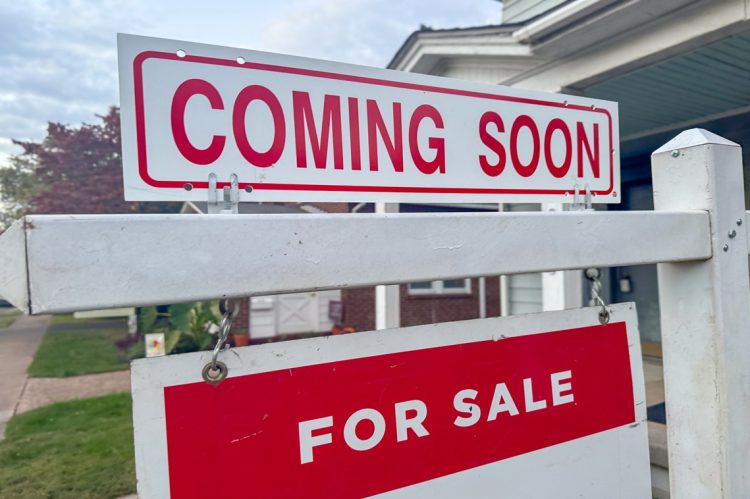
“Premarket listings.” It’s the new industry catchphrase, thankfully replacing “commission lawsuits,” but, alas, it comes with its own controversy. The practice of promoting a property to potential buyers and agents before being listed on the Multiple Listing Service (MLS) has also made its way into the courtroom, most prominently via a tussle between Compass and Zillow, then with Zillow and others mainstreaming the practice.
But not all C-suiters give thumbs up. Eddie Garcia, CEO of Realty of America, headquartered in Chicago, doesn’t mince words about premarketing.
“Demand is growing, but let’s be clear,” he says. “This is being driven by brokerages, not sellers. Most sellers still want one thing: the highest price with the most certainty. When you explain that full exposure creates competition, that’s still what wins. Premarketing is getting attention because big players are pushing it, not because it’s proven to outperform.
“I understand the appeal,” he continues, “but price discovery doesn’t happen in private, it happens in the open market. You can ‘test’ a number privately, but you’re not getting true demand data. The MLS creates urgency, competition and real feedback. I would only use private testing in very specific situations, not as a standard approach.”
Pam Rosser Thistle, an agent with Berkshire Hathaway HomeServices Fox & Roach, Realtors® in Philadelphia, cautions that as brokerage profits tighten, some are looking for a hook.
“At this moment in time, private exclusives are the sizzle,” she says. “Since agents and brokers copy one another, now almost every major brokerage has its own exclusive network. It takes us away from collaboration and in some cases, pushes over the edge on Fair Housing access to all. It also decentralizes the functioning of real estate sales and makes it harder for appraisers to pull comps.
“In my experience, clients are not up to speed. They are looking for an agent they can trust who will find them a house or sell their house. Someone strong in negotiations who can professionally guide them through the process with their best interest at heart. Not a hook. With the average age of a buyer and seller higher than ever, being patient and accommodating is important. Many of my clients are elderly. Some do not DocuSign or are uncomfortable with a computer.”
Marta Grace, broker/owner of United Real Estate Kansas City, notes that premarketing is a powerful tool when used to build momentum, but not when used to limit exposure.
“Our duty is clear—maximize the seller’s opportunity, not restrict it,” she says. “The best strategy is not ‘off-market vs on-market.’ It’s how well you execute both phases together.
“There is moderate awareness among sellers regarding premarketing options like ‘coming soon’ listings and private listing networks, but there is still a general lack of true understanding. Most sellers have heard these terms through social media or agent conversations, but they often assume these strategies create more demand rather than recognizing that they can limit exposure. In most cases, sellers and buyers are largely driving the demand for these ‘coming soon’ listings due to their lack of understanding of its limitations.”
Ivan Sher, founder of IS LUXURY, headquartered in Las Vegas, asserts that keeping a new listing off the MLS is more an agent’s idea rather than a seller’s.
“Demand for premarketing strategies, such as off-market listings or private listing networks, tends to come primarily from agents rather than sellers,” he says. “These approaches can be especially valuable when a seller prioritizes privacy, security or greater control over how their home is introduced to the market. Instead of launching with a full public listing, the property can first be shared through a curated, invitation-only process, with the option to move to the MLS later if needed.
“An off-market phase also allows sellers to gauge buyer interest and quietly test pricing by presenting the home to a select group of agents and qualified buyers. This limited exposure can create a sense of scarcity, which often increases the property’s perceived exclusivity and appeal. From an agent’s perspective, pre-marketing leverages local expertise and established networks to connect serious buyers with properties before they reach the broader market. At the same time, it keeps the process streamlined and minimizes disruption for the seller.”
The idea of testing pricing without accruing days on market is appealing in theory, but it presents real risks in practice, especially when considering fiduciary duties.
“While it can create a sense of flexibility and reduce the appearance of market time, it also limits full market exposure, which could potentially impact the seller’s ability to achieve the highest possible price,” says Grace. “From a compliance and liability standpoint in Missouri, this strategy must only be used with clear, informed, written consent from the seller, along with a full explanation that limiting exposure could result in leaving money on the table. If a property is being publicly marketed in any way, it should be entered into the MLS in accordance with policy.”
Conversely, Sher feels that the ability to test pricing without accumulating days on market or recording price reductions is something that is often valuable.
“Off-market marketing can be an effective way to gauge buyer sentiment in real time before a property is publicly listed,” he says. “For example, if a seller believes their home may be worth significantly more than recent comparable sales suggest, quietly sharing the property with select agents and qualified buyers can provide meaningful feedback. It allows us to observe how the market responds and adjust pricing or positioning if necessary, without creating a public record of price drops or extended time on market.”
The buyer’s perspective
While sellers clearly would like to attain the highest price for their home, with or without utilizing premarket tactics, buyers also have their particular desires.
“They love the idea of access, but don’t want a fragmented market,” says Garcia. “The reality is, buyers want to see everything, not pieces of inventory controlled by different companies. ‘Exclusive inventory’ is being used more as a recruiting and positioning tool than a consumer solution. Long term, the consumer loses if inventory gets split up.”
Grace pretty much agrees, noting that buyers are generally attracted to the idea of having access to “exclusive” or off-market inventory, largely because it creates a perception of advantage.
“However, in reality, most serious and motivated buyers still rely heavily on MLS access and speed in competitive situations,” she says. “While some companies may find short-term success promoting exclusive inventory, this approach can create longer-term concerns around transparency, Fair Housing implications and overall market efficiency. As a result, this strategy tends to function more effectively as a lead generation tool than as a consistent, best-practice approach for serving sellers.”
Sher serves the high-end market, so his clients often request to see premarket properties.
“Our buyers show strong interest in access to exclusive listing inventory,” he says. “It’s often one of the first things they ask about when reaching out. A significant portion of our inquiries come from buyers who specifically want to learn more about our private listing network.
“The appeal of off-market properties goes beyond simple availability. They offer a sense of insider access, giving buyers the opportunity to explore homes that aren’t widely known or publicly marketed. This tends to attract serious, motivated buyers and adds an element of excitement and anticipation to the search process.”
So are brokers and agents encouraged by their leaders to pursue premarket listings? The answer is often yes.
“I encourage our brokers to understand every tool available, but our job is to deliver the best outcome for the client,” says Garcia. “Premarketing is a tool, not a strategy. If it helps in a specific case, use it. But full exposure through the MLS is still the most effective way to drive competition and maximize price.”
Grace notes that some brokers encourage agents to explore premarketing strategies as a way to gain greater control over listing inventory, increase internal transactions and differentiate their brokerage in a competitive market.
“However, not all brokers are pushing this approach, and many remain cautious due to compliance risks, potential commission disputes and fiduciary concerns,” she says. “In many cases, these strategies are being adopted at the brokerage level for competitive positioning rather than being driven by clear consumer demand or benefit.”
The big question is whether or not premarketing options help win listings.
“In the short term, yes,” asserts Garcia. “It’s a strong pitch. But winning a listing and delivering the best result are two different things. Sellers will always gravitate back to what gets them the best price. The agents that last are the ones who focus on results, not trends. The MLS is still the most efficient system for price discovery, and that’s not changing anytime soon.”
Grace insists that premarketing can help agents win more listings because it sounds strategic, customized and sophisticated to sellers, while often appealing to their desire for control and the perception that their property will be handled differently than others on the market.
“However, premarketing as a way to limit exposure or sell off-market can create both legal and financial risks,” she warns. “A more balanced and effective approach is to use premarketing to build momentum and anticipation, while still ensuring full MLS exposure at the appropriate time to maximize competition and ultimately achieve the best possible outcome for the seller.”
Sher believes premarketing as a strategy is fine as long as it is tailored very specifically for each client who desires it.
“I encourage my agents to focus on representing their sellers and understanding their specific needs first,” he says. “If a seller would benefit from a more curated or teaser-style approach before going fully public, then I encourage agents to explore those premarketing options. The goal is to create a strategy that aligns with the seller’s timeline, privacy preferences and overall marketing plan, rather than applying the same approach to every listing.”