As much of the country has been enveloped in scorching heat recently, is it too early to start planning for issues that arise during the cold months? Not in this industry, as deals take months to close and market seasonality can always upend your business. Warm weather is ideal for showing houses, unless there’s a long, hard rain or it’s just insanely hot. However, cold can have its own challenges, so it’s best to prepare now instead of having to figure it out in real time.
“In the winter, cold weather is likely to slow down a buyer, and snow will bring everything to a halt for several days,” says Jeffrey Decatur, with REMAX Capital in upstate New York. “There is nothing colder than a vacant house with no heat. But winter doesn’t necessarily work the same way as summer. In the winter, you can have the heat on minimally and it still feels warm, and shows the furnace is working.”
Several other factors play into winter showings, during which buyers often face limited inventory, hidden property defects under snow and ice, shorter daylight hours for viewings and difficult moving logistics. Pictures and videos of the property taken during warm months are crucial so clients can visualize the home and land properly.
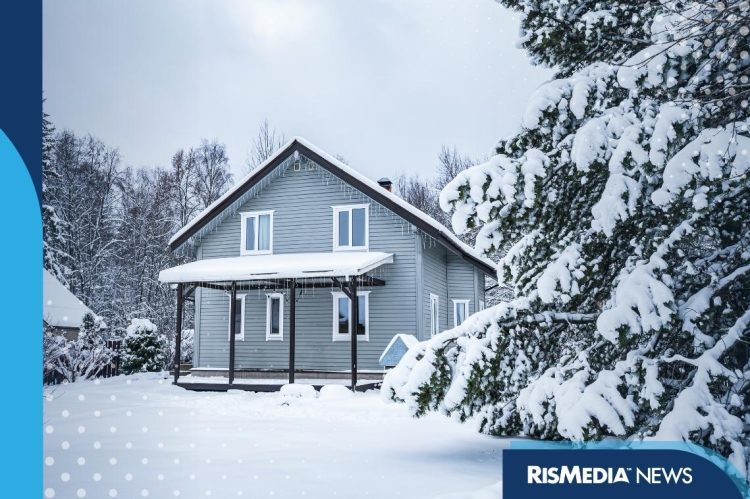
Some of the negatives associated with winter househunting include the fact that snow and ice can completely cover the roof, gutters, deck and foundation, making it hard to spot cracks or wear and tear. Outdoor items like central air conditioning units, sprinkler systems and swimming pools cannot be tested in freezing temperatures. Yards, gardens and grading would be hidden under snow, leaving buyers unsure about drainage and lawn quality.
Dangerous conditions can also be a factor, especially for older buyers, when it comes to getting out to see houses.
“Cold weather also changes what buyers pay attention to,” says Shannon Murree, with REMAX Hallmark Chay Realty Brokerage in Barrie, Ontario. “In winter, I point out how the home is performing in real time. Are there drafts around the windows and doors? Are some rooms noticeably colder than others? Is there condensation on the windows? Does the basement feel damp or unusually cold? Is the furnace, boiler or heating system keeping up? Are there service records? How old is the system? What type of heat is it?
“I also pay attention to the temperature of rooms on each level. If it is a forced-air system and one room is noticeably hotter or colder than another, I will flag that as something to question further. It could be venting, airflow, duct layout, distance from the furnace, insulation or another issue that should be looked at more closely.”
“A slanted driveway could result in a broken hip from falling during icy conditions,” says Donna Deaton, with REMAX Victory + Affiliates in Cincinnati, Ohio. “That can be a factor that buyers may think about if they want to see homes on cold but not snowy or ice-covered ground.”
Parisa Afkhami, an agent with Coldwell Banker Warburg in New York City, adds that some buyers are so zoned in that nothing will stop them.
“I was with first-time buyers where we were pounding the pavement looking in January and February during historically low temperatures,” she says. “It was so cold that we could barely speak as we walked from showing to showing, but the positive was that fewer people were looking, and they found their dream home.”
Veronique Perrin, also with Warburg, explains that she “loves extreme weather because anybody mighty enough to keep at it is serious. My favorite story is of a buyer I met for a round of back-to-back showings on a brutally cold day after a major snowstorm. Walls of snow were several feet high everywhere, and he showed up on crutches because he had just had ACL surgery. We did find his home that day, and I think of him every time I take clients out on a snowy day.”
Lisa Harris, with REMAX Center in Braselton, Georgia, points out that “when the weather is extreme, buyers are definitely more interested in investigating efficiency, extra insulation, age of systems, maintenance records, utilities records, upgrades and more. I always try to have sellers prepare this beforehand so we stand out above our competitors.”
Agents know that people still need homes because of job changes, growing families, marriages and other life events, notes Todd Luong, with REMAX DFW Associates in Frisco, Texas.
“Extreme weather can also affect relocation buyers more than local buyers,” he says. “Weather can definitely become a deciding factor at times for some people. It creates different concerns. After Winter Storm Uri in 2021, some buyers and investors became more cautious about older homes because of plumbing risks. Buyers now ask more questions about pipes, insulation, water shutoff locations and whether a home has been protected from freezing temperatures. Weather is also connected to foundation concerns.”